
The Short Version
From ranch reservoir to provincial park
The surprise at the heart of Leighton Lake’s story: it was created, not found.
In 1909, the Leighton family — Savona ranchers led by James Buie Leighton, a mail contractor and ferry operator who helped build the district — dammed this basin on the plateau to store water and improve their summer range. The lake that formed took their name, and for decades it worked for a living: its water was managed for irrigation to downstream ranches, part of an engineered network of dams, creeks, and channels that still operates today.
Then the trout took over. Stocked Kamloops rainbows thrived in the rich, shallow water, and by the mid-twentieth century the “working reservoir” had quietly become one of the Thompson Plateau’s famous fishing destinations. In 1996 the lake and its surroundings were protected as Tunkwa Provincial Park — with the cattle, the dams, and the fishing all carrying on inside it. The ranching history of the area lives on here.
Timeline
A century in the making
-
1880s
Savona roots
James Buie Leighton builds the family’s base in the Savona district — winning the Cache Creek–Kamloops–Okanagan mail contract in 1881 and the Savona ferry charter in 1883 — and becomes a driving force behind local ranching and irrigation.
-
1909
The lake is born
The Leighton family dams the basin to store water for their summer range. Leighton Lake — a hand-built reservoir on the high plateau — fills for the first time.
-
1927
Officially on the map
The name “Leighton Lake” is formally adopted by the provincial place-names authority on June 7, 1927, honouring J.B. Leighton.
-
1949–50
Managed water
The Durand Creek Water Users’ Community takes over the water-control structures on Tunkwa and Leighton, working with the provincial Fisheries Branch to balance irrigation demand with lake levels — and a 1950 Crown permit authorizes flooding adjacent land for more storage.
-
1968
A famous fishery
The provincial Fish and Game Branch charts the lake in a bathymetric survey — official recognition of what anglers already knew: the stocked Kamloops rainbows here had made a working reservoir into a destination trout lake.
-
1960s–70s
Cabins, roads & new neighbours
Lakeside lots are leased (many later becoming private properties still dotted around the shore), logging roads open up the plateau, and the instant mine town of Logan Lake rises nearby in 1971–72 — bringing a whole new wave of campers and anglers up the hill.
-
1996
Tunkwa Provincial Park
On April 30, 1996, the lake and its surroundings are protected as Tunkwa Provincial Park. In a very BC compromise, grazing and existing water rights continue inside the park — a working landscape, now protected. Boundary refinements follow through 2003.
-
2012
Protecting the grasslands
The Province closes the surrounding sensitive grasslands to off-road vehicles year-round; motorized use in the park is limited to designated trails and staging areas.
-
2019
A smoother ride in
Tunkwa Lake Road between Savona and the park is resurfaced — the paved, easy access visitors enjoy today.
-
2021
The Tremont Creek wildfire
Wildfire forces evacuations along Tunkwa Lake Road through August 2021. The campgrounds endure, but burned timber on the surrounding hills still tells the story — and the forest is already greening up beneath the snags.
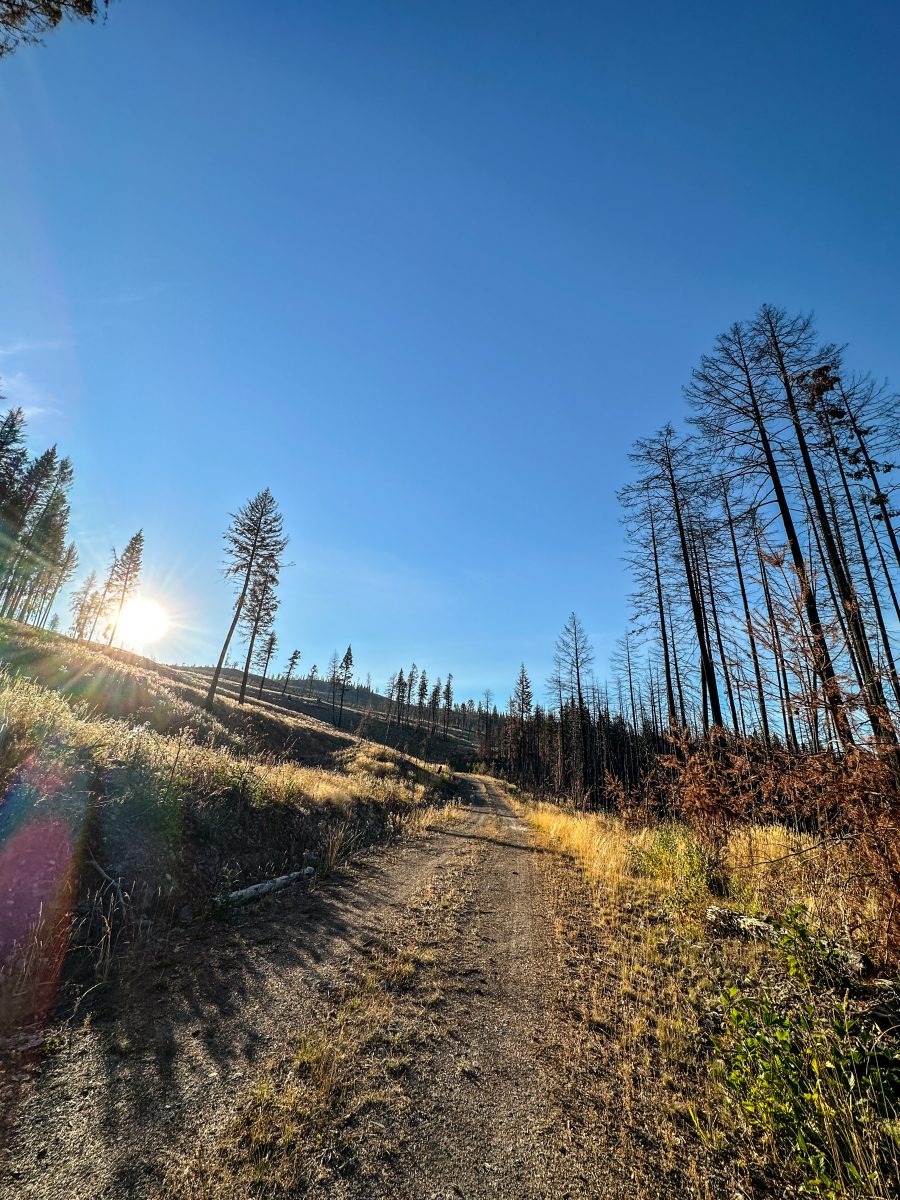
Through the burn, a few years on — blackened snags, golden grass, and new green coming up. -
Today
A living, working lake
The dams still hold, cattle still graze the grasslands, rainbows are still stocked every year, and the lake even serves science as a monitoring site for invasive mussels. More than a century on, Leighton Lake is still doing what it was built to do — and a great deal more.

Dig Deeper
Sources & further reading
The history above is drawn from official park and provincial records, including the BC Parks Tunkwa Park page, the 1999 Tunkwa Park Management Plan, the James Leighton fonds at the Kamloops Museum & Archives, and the District of Logan Lake history.
Got a piece of the story?
Old photos, family memories, or documents about the lake’s ranching and fishing past? We’d love to see them — email [email protected].